Jun 18, 2008

A Historian's Dream

One of the most wonderful parts about living and teaching in Syria was that I had so much time to reflect upon my experiences. As soon as I returned to Canada, that luxury seemed to disappear again. It is my intention in the next few days to reflect both upon my last week in Syria and the trip on the whole. I hope that my long absence will be excused and that the following pictures will act as an exciting teaser for the thoughts to come.

Above: Back on the Damascus Highway...
Below: The road we drove down in the school's mini-buses to get to our first castle
Yes, we did have to drive up the other side of the valley.
And yes, every single corner was terrifying.


Above: Standing in the dry moat of Salah al-Din's Citadel. The moat was mostly dug out of the bare rock - only the top-most part of the wall is actually constructed of brick and mortar.
Below: Ryan explains as the students get ready to look at their first castle. Even for a number of the Syrian students, it was the first time visiting these historic sites!


Above: Two deep valleys form natural impediments to any invader who might attempt to take Salah al-Din's Citadel.
Below: Students explore the most fortified side of Marqab, a Crusader castle overlooking the Mediterranean Sea.

Above: The brick and mortar of Marqab.
Below: Students prepare to explore the enormous Krak de Chevalier.


Above: This space was home to some 250 horses when Krak de Chevaliers was garrisoned by the Knights Hospitaliers.
Below: Michael demonstrates how the sunbeams coming from small openings in the ceiling were manipulated to light an entire underground room.
Far Below: Looking past the solid walls of the Krak.


Mar 25, 2008

Historical Tourism*


(Above: A naive and happy tourist in the Syrian desert;
Below: The closest I'll ever get to Iraq)


*Alternative titles for this post: How I Was Scammed in Palmyra; The Longest Post I Have Written in a Long Time; Why Ruins Are Less Interesting Than Real Cities; Our Unnecessarily High Tolerance for Big, Heavy Blocks of Old, Carved Rock; The Relative Merits and Detractors of Camels as a Mode of Transportation; Proof That Reflection is Preferable to Narratives of My Experiences in Syria.

When discussing housing for students in southern Ontario, my dad often jokingly claims he would be very happy as a slumlord to charge inflated prices for lousy apartments. Well dad, if you want to be a slumlord and laugh all the way to the bank on a monthly basis, then I want to work in a tourist town selling overpriced novelties to suckers on a daily basis.

These are the words of an embittered tourist. The short story: I paid the equivalent of one hundred Canadian dollars for a four-hour camel ride in a country where a fifteen-minute taxi ride costs fifty cents and a shwarma is under a buck.

It was only at 8 am on the first day of my five-day weekend that I received a call from a fellow Canadian teacher asking me if I wanted to accompany him and his wife on a three-day trip to Palmyra, which Lonely Planet calls “Syria’s prime attraction and one of the world’s most splendid historical sites.” Since my weekend plans had been fluid to begin with, it was a matter of minutes before I was packing my bags for a little road trip into the Syrian desert. We arrived in Palmyra after a four-hour drive and just in time to view the ruins as the sun was setting. Before we sat down to dinner, our innkeeper, who ran a somewhat questionable establishment, introduced us to a fellow who would take willing tourists on a camel ride past the ruins and into the desert to have breakfast with a Bedouin family before returning via the oasis beside which Palmyra is situated. We paid S£3000 ($60 CAN) in advance, and our inquiries as to the remaining payment were met with the response “Just a little bit more.”

Why should I have worried? I was traveling with a couple who, despite only having lived in Syria for six months, knew their way around Aleppo better than many of the Syrian teachers at the school in which I am teaching; furthermore, they proved themselves effective bargainers as we went through the different shops that evening. Both John and Wain (Yep, that’s her name. It was a constant struggle to avoid making John Wayne comments during our time together.) effectively and repeatedly brought venders down to sixty, fifty, and even forty percent of the original asking price through effective haggling. If they were not worried about having a price nailed down, who was I to argue?

(Our fearless leader, aka An accomplice in the scam)

As I discovered at 5 am the following morning, camels are a comfortable mode of transportation for approximately fifteen minutes, and this quantity diminishes as the camel’s speed increases. We rode out into the freezing desert as the sun rose behind our backs, but since I was more concerned with staying warm and atop my hump-backed steed, it proved particularly difficult to turn around and capture the ruins against the first light of the day. After riding for a little less than two hours, we broke our fast with a meal of flat bread, olives, pickled peppers, and apricot jam in the tent of a Bedouin family. While I definitely questioned whether invading this family’s home was a responsible choice or not, I was grateful for their hospitality and the opportunity to stretch my legs by playing some soccer with the two boys living in this particular tent. I even got a laugh out of the entire family when I was putting my kufeyya back on. Upon returning to our camels, our guide led us through more of the desert and then into the oasis. It was beautiful but way, way, WAY too long a camel ride. Of course, when we finally arrived at our stopping point and John informed me that we still needed to pay another S£7000 ($140), I knew two things: that we had indeed been taken for a ride in more ways than one, and that Palmyra would never be a place fondly-remembered.

(Top: Two soccer-playing champions;
Middle: Worst form of transportation ever;
Bottom: Okay - so you can get some pretty impressive pictures)

Palmyra reminds me of Niagara Falls. In both instances, I navigated though dozens of tourist traps, souvenir shops, and over-priced hotels to arrive at the attraction I had actually come to see, and in both instances I found myself wondering if these sites garnered more praise and hype than they actually deserved. The Falls are impressive, but I would not return more times than absolutely necessary. The same is true with Palmyra – I would not try convincing somebody to visit this ancient city unless she or he was going to be in Syria for more than five days. Don’t get me wrong – there is something incredible about standing in the ruins of a city predating the Roman Empire, but… what is left of that city is only the briefest outline of what once existed. A good deal of what is standing has been roughly re-cobbled together, and in the absence of reliable interpretation, most visitors will take away little more than some neat pictures, a booklet on the history of the site, and an over-priced necklace (unless they bargained successfully).

(Tourists are often followed right to their car by locals trying to sell a variety of trinkets)

I arrived back in Aleppo in the afternoon on Good Friday just in time to get changed, start a load of laundry, ride a taxi downtown (all by myself), and meet another teacher to watch the Passion processions taking place that afternoon in the Armenian Quarter. The Roman Catholic, Armenian Orthodox, and Maronite Christian churches hold afternoon services on Good Friday, and each church, led by a small band, servers, and the local bishop, process with a shrouded image of Christ through the square into which each church building faces. Afterwards, we followed the tradition of visiting and saying a brief prayer at seven different churches located in the vicinity.

(Top and Middle: Two pictures of the Roman Catholic scouts playing for their procession into the square;
Bottom: Cross-bearers, servers, and the bishop, who is near the back-right)

When I was having dinner with yet another Syrian teacher (you can tell that I’m being looked after while I am here) that same evening, we ended up talking about how being present at the Passion processions, along with hundreds of other Syrians and Armenians who lived in Aleppo, was so much more meaningful and tangible for me as a visitor in comparison to my trip to Palmyra. Maria and I agreed that Syria comes alive through its people. The history of the country would complement and inform my experience, but it was more important to interact with Syrians or at least people-watch to gain a more genuine and real-life appreciation of the country. This conclusion leads me to think that public historians might want to spend more effort fostering authentic encounters between visitors and host residents rather than only mediating the visitor’s experience through a historical trip and a camel ride. (This is not to say that somebody has given extensive thought to a tourist’s experience of Palmyra but rather that place and history are only two of the many facets by which it is possible to understand a culture)

As a combined result of my own weariness, my “ruin-fatigue,” and my conversation with Maria, I did a very unhistorical thing and decided to cancel a visit planned for the following day to Apamea and a museum filled with ancient mosaics. Instead, for the next two days I slept in a little, finished my laundry, and went on some long walks through Aleppo. I may not be as good as John and Wain at making friends wherever I go in spite of language barriers, but I nevertheless can take pride in finding my way home after getting a little lost and buying groceries all by myself!

I am still incredibly excited to visit the Crusader castles next week. These fortresses, which are more complete than the ruins of Palmyra, will without a doubt be a wonder to behold. Until that time though, I believe that I will very content encountering the living history of the souqs in Aleppo and the people of Syria more generally.


(Note: I owe my readers an apology for both the length of the above post and for the number of posts appearing all at once. The amount of free time has enabled me to reflect copiously upon my experiences in Syria thus far, but the opportunities that I have to actually get my thoughts online are limited. It is likely that few will even read this footnote after having only scanned over the above post. This is the game that I am playing here. Sorry!)

Re-Thinking Syria: Clothing

When I was flipping through my Lonely Planet book for the Middle East, I came across a passage that essentially read: “Take a look around – almost all men in Syria wear pants, regardless of the weather.” When I began thinking about the Syrians I had seen on the street, I realized that the majority wear not only pants (rather than the shorts that we Canadians sport once the thermometer hits a balmy nineteen degrees and the sun shines brightly again) but also usually have long sleeves on. I had been considering taking shorts to wear when visiting Palmyra, which is in the middle of the Syrian desert, but I decided to stick to shorts after re-reading this passage.

Even after being in Syria for two weeks and seeing otherwise, two general stereotypes still come to mind when I first consider what people wear in this country: dusty clothing and women wearing the hejab. If I think about pictures that I have seen from the Middle East, the people photographed often look like they spent their morning rolling in dust. The hejab, a scarf worn by many Muslim women, is well-known to many Canadians thanks to the coverage that it gets in the media.

I hope it is not too surprising to read that Syrian clothing reflects the diversity of ethnicity, religion, and wealth that exists within the country. While it is true that in most neighbourhoods of Aleppo, one can hardly walk two blocks without seeing a woman who is wearing black and fully covered from head to toe, one is far more likely to encounter Muslim women wearing the hejab along with a long dress and jacket. When I visit the Armenian quarter of Aleppo, I come across Western hairstyles, make-up, and clothing. When considering the men of Aleppo, the vast majority are wearing Western-style clothing. Jeans and long-sleeve shirts, sweaters, or blazers are the norm for both Muslim and Christian men. There are some older men who I have seen wearing full-length robes, but these have been made to match the coats the men are wearing, and to my eyes go together as naturally as the jacket and pants of a suit in Canada. Bedouin men wearing the kufeyya are essentially the only people sporting any sort of headwear, so I know that I will probably stick out as a tourist whenever I wear a hat!

The quality of clothing varies among people as well. Some people are wearing clothes that are faded, worn, or look slightly out of date, while others are clothed in fine fabrics with bright colours, brand names, and intricate designs. I have seen a number of people who do look… well… dusty, but to be perfectly honest, this is a dusty city! Even after a rainfall there is a haze from both the pollution and dust in the air, and people cannot hang their clothes to dry outside because of the layer of dust that will accumulate over the course of a sunny, windy afternoon!

I usually wear pants and a short-sleeve button-up shirt to school, but I have been switching into shorts at home if I know that I am not going out again in the evening. I cannot say that I particularly enjoy walking around wearing pants when the sun is shining and feels like 25°C outside, but suppose one would get used to the habit after suffering through a summer here! Thank goodness I am here in the spring!!

Mar 18, 2008

The Hash

This past weekend I became a hasher. No, this is not some bizarre, drug-induced psychedelic experience but rather a run through the ruggedly beautiful Syrian countryside. Of course, it should be noted that hashers are always proud to say that they are a drinking club with a running problem!

(Baptized a hasher)

I will leave Wikipedia to describe the history and essentials of hashing, and simply begin by saying that our course started about a half-hour’s drive out of Aleppo. The course was marked with blue chalk powder that took us over five kilometers of stony hills, through abandoned towns, under the shade of well-tended olive trees, and up to the walls of a pilgrimage point dedicated to St. Simeon. It was an absolutely beautiful day – the mountains of southeastern Turkey were visible in the distance - and a wonderful way to escape the noise and smog of the city. Throughout the day, I got a good sense of how life worked in the villages of Syria: I maneuvered in between grazing cattle, saw families out for picnics, and saw the challenging farming conditions from which many Syrians must make their living. Contemporary Syrians can in no way be blamed for the erosion of topsoil due to thousands of years of agricultural mismanagement. Cattle and sheep can graze among the rocks, but a Herculean effort would be required to remove all the rocks that have been laid bare by over-farming!

I could not help but feel that I was both an observer and participant of history. When visiting the former home of St. Simeon, a hermit who dispensed advice from atop the high post that he chained himself for over thirty years, it was amazing to imagine how the hilltop must have been transformed over the years from an isolated dwelling to a popular pilgrimage point to a large chapel and later to a ruin of that chapel. I have a lot to look forward to when I visit the castles in two weeks! Soon after making my way past the ruins of St. Simeon, I was initiated into the worldwide community of hashers. After wandering over hills under the bright midday sun, I was baptized with blue chalk and beer alongside other hash initiates and then downed a Heineken while veteran hashers cheered us to drink it or pour it on our head. (Fear not friends – the cool and refreshing beverage was in no way wasted on the colourful crown of my head!) It was a bit of a cultish experience, but it is funny to think that this tradition was started by a bunch of British diplomats living in Malaysia in the 1930s!

With tongue slightly in cheek, I cannot help but wonder whether this is what Public History ought to resemble: experiencing the modern and ancient history of a country by spending the day outside, exploring farmland and historical ruins, and winding down with a some laughs and a few drinks. (My professors: “Great Jeremy – bribe them into enjoying history with beer.”) Well, all I can say is we would certainly be making steps towards appealing to and engaging a new and broad audience!

(In the midst of the ruins at St. Simeon)


Mar 17, 2008

Re-Thinking Syria I: Weather

While I prefer to capture moments of my trip rather than give a simple narrative of my days in Aleppo, I can appreciate that some of my readers might be looking for something that is a little more linear and gives a better taste of life in the Middle East. Allow me to inaugurate the "Re-Thinking Syria" series of posts, which should satisfy the aforementioned needs while also allowing me to provide a little critical analysis of some the assumptions people hold regarding Syria and the Middle East.

The last few days in Syria have been cold. I may not have been putting on a toque and snowsuit to go outside, but as I write this wearing socks, pants and three shirts, I am strongly considering putting on my rain jacket to keep a little bit warmer. That's right – my rain jacket, which I brought because it has been raining so hard today that water was seeping through the windows and doors of the balcony and onto the tile floor of my bedroom. The words "weather" and "Syria" probably do not invoke images of chilly weather, but there you have it – the weather here in Aleppo is comparable to a cold and rainy October day in southern Ontario.

Of course, I should not complain too much. After all, the latter part of this past week has been sunny and breezy with highs averaging around sixteen to twenty degrees Celsius. I have not put on shorts, but it has certainly been comfortable to wear short-sleeves in the evenings!

So have a little pity for me – it's freezing here!

Mar 14, 2008

First Impressions

When the plane touched down in Aleppo and I made my way up the boarding ramp, I was seized by a fit of chills. I do not know whether they were caused by my tiredness, the cool morning breeze that was coming through open doors in the airport, or the anticipation that I was feeling as I stepped onto Syrian soil. I had arrived in Aleppo.

Aleppo International Airport is about the same size as Windsor Airport, but the similarities end there. The fields surrounding the tarmac are more rocky than grassy, signs inside the terminal are written in both English and Arabic, and Middle Eastern music plays over the loudspeakers. The airport was relatively deserted because it was 6:00 am local time. I had only to clear customs, pick up my bags, and meet a representative from my host school.

One of the first things that I was told by one of my hosts at the school was that Syria seems stuck in the 1950s. Whether or not this observation is true, it is undeniable that the history in this country comes in tangible and intertwined layers. During my time walking or driving though Aleppo, I have seen (and dodged) cars in various states of repair from around the world that are brand-new or fifty years old. I have visited beautiful, modern apartments and driven past homes that seem like they are half-falling apart. I have bought Kellogg's Corn Flakes at a grocery store and purchased vegetables off the street. I can sit at a computer to type an email and hear the call to prayer from at least three different nearby mosques – and I can tell you that that was a surreal experience when I was experiencing severe jetlag my first day here! It would be unfair of me to describe Syria as being stuck in the past though because such a description would categorize and pigeon-hole a country that is clearly in the midst of change. In the last week, I have encountered and met Syrians who are generous and friendly. People might be aggressive on the road – the meanest, most aggressive driver from Toronto or Boston (the two cities in which I have seen the craziest drivers) would not stand a chance on the streets of Aleppo – but nobody I have spoken with, whether from Syria or abroad, has spoken of concern for their general safety.


(The current and former presidents of Syria - Their faces are everywhere in the city)

Many people have asked me if Syria is
what I expected. Because I tried to purge generalizations from my mind, I really did not know what to expect. At the same time, I have been very happy to discover that kids are still kids here in Syria and that the sense of history, tradition, dynamism, and community are all so powerful and ubiquitous in Aleppo.


(Banners in one of Aleppo's many narrow streets)

Mar 3, 2008

To Syria

In September, it was a possibility: “Yeah, Syria is one of the places I’m thinking about.”
When December arrived, it was a choice: “I’m hoping everything works to go to Syria.”
By January, the wheels were in motion: “So I’ve got my ticket to go to Syria!”
In February, I was assured: “I think you will be pleasantly surprised about traveling to Syria.”
This past weekend, I began saying adieu: “Check out my blogs while I’m in Syria!”

Being a somewhat less eloquent writer than some others, I find myself at a loss for the words to appropriately describe my intentions at the outset of my visit to Syria. The official reason for this trip is to gain experience teaching and learning in an international context. I have the incredible opportunity to introduce students the history of the Crusades and accompany these young individuals on trips to a number of the castles that were built during this period of history. As a historian, the prospect of traveling through one of the cradles of civilization where innumerable historic figures lived, fought, and traveled even now leaves me awe-struck. While I hope that friends will never peg me as merely the guy who will always be happy as long as you find him a museum, historical site, or dusty manuscript, I simply cannot wait to find myself surrounded by the walls of castles that once sheltered Salah al-Din and his armies or crusading knights from Europe.

To understand my most deep and fundamental desire to visit Syria though, my reader needs only to recall recent history, hysteria, and horrors. Despite its rich past, its cultural diversity, and its devotion to religious values, the Middle East has been characterized in black-and-white images as a haven for terror, a region of instability and intolerance, and a breeding ground for religious fundamentalism. This is simply an unfair characterization of a region inhabited by hundreds of millions of people. If it is the historian’s job to present and analyze information in a fair and balanced way, then this historian is seeking to address the imbalance in the story of the Middle East that is being told and retold in the media and in households today. If educators are responsible for preparing students to live well and make thoughtful and intentional decisions, then this educator believes that students need to hear an alternative narrative to the prejudiced, conflict-driven message that is currently being circulated. If there is ever to be lasting peace on this little planet of ours, that peace is going to come from understanding.

To this end, as I write over the next month and when I return to Canada after my trip, I hope to be an ambassador for Syria. I do want to describe the amazing experiences that I am having and reassure worried family and friends that I am indeed safe and sound, but it is my deepest desire to convince my readers and listeners that we need to consider these people – Syrians, Arabs, Muslims, people from the Middle East – as individuals who are our friends and neighbours rather than a faceless mass to be feared and contained.

I am not the greatest storyteller –I can never think of the appropriate story at the party unless it occurred in the last two months and often need to be reminded of events that happened only a few years before; consequently, my blog posts and the photos I take will help me to recall teachable moments and surreal experiences in the unlikely event that this trip does not leave a profound impression upon me. At the same time, I will likely comment on matters historical here and educational in Humility in Education, and some posts (like the one that you are now reading) will appear in both blogs, so please look forward to posts that are academic but hopefully not too irregular or uninteresting! When you read though, it is my desperate hope that you will also consider the serious purpose of my visit.

Syria-usly? Yep. Seriously.

Finally, I hope that you will share in my travels by commenting on my posts. Well-wishes and wish lists, comments and concerns, stories and suggestions are enriching for everybody who will continue read on.

“What’s new with me? Well, I’m going to Syria.” What an adventure!

Working at Library and Archives Canada

I had the opportunity to work at Library and Archives Canada for the summer. I am truly sorry that I found myself too busy to blog regularly about what I was learning as a historian working in the public sphere, so I will be unable to do real justice to the institution and my experience there. It is nevertheless important for me to post a few enduring understandings I realized during the summer.

First of all, I would like to say thank you to the folks with whom I had the opportunity to work. For students studying both Public History or subjects in History, the archives provided a terrific mix of short- and long-term projects as well as the satisfaction of knowing that the majority of this work would benefit clients down the line. Overall, the internship proved to be a great opportunity to employ my historical skills in an forum that was both accountable for storing and managing information while also making historical sources available to the public.

Secondly, I gained an incredible appreciation of the challenges that archival institutions face. If Canada’s national archive struggles with the enormous challenges of acquiring, assessing, organizing, and describing collections, I can only imagine the state of smaller archives with fewer resources. It will take increased financial resources to maintain the massive volume of information acquired annually archival institutions. In order for governments and taxpayers to agree to the allocation of greater resources towards archives though, I believe that archivists will have to prove and demonstrate to the public that archival institutions have value to an audience broader than historians and genealogists.

Thirdly, I cannot say enough times that I think it is more important make documents available than to preserve them. I strongly believe that documents should be put at some level of risk if it means that more people will appreciate the historical, educational, and social value of archives. While some documents have legal value and are kept for that purpose, there are certainly documents of purely historical value that should be more widely used in traveling and in-house exhibits and educational programs.

I wish Library and Archives Canada and my co-workers all the best as they continue on with their very important work. They can look for me soon when I bring a class of students in to cause a ruckus in the reading room at the building on Wellington!

Feb 17, 2008

Whither Blogging?

As has happened a number of times in the past eight months, I find myself wrestling with the purpose of this blog. Blogging has become like going for a run after a month of not running. It is really hard to get back into a groove, and I am not even sure what my new groove should be.

Do I jump into conversations that this year’s Public History class at Western is having? Perhaps I should stick to the discussions and challenges presented by the digital historians I try to read regularly. Should I seek out K-12 teachers blogging about many of the issues that I am coming into contact with as a teacher candidate? I did start a second blog on education, but I can’t help but think that it might be easier for my audience, which because of my absence from the blogosphere has likely dwindled down to a few hardcore readers, to read just one blog. On the other hand, a different blog might be a more appropriate forum to discuss my upcoming practicum in Syria or my challenges with teaching Chemistry.

The one question that overshadows all of these considerations is: “Why blog at all?” Indeed, my motivation to publish my reflections online deteriorated rapidly after my Public History coursework was completed last spring, and the moments that I have found to actually reflect and write have been few and far between since I began my B.Ed year. Yet the professional value of maintaining a blog has not diminished in my eyes. There have been numerous occasions where I have thought, “This assignment could easily be turned into a blog post.” My “Blog Drafts” document has grown into a fifteen-page long stream of consciousness that could be converted into brief flashes of brilliance if I ever found the time to get back up to date.

I welcome any thoughts on how I should continue to blog. Let me conclude this stream of consciousness by setting out a renewed direction for my blogging: Both Humility in History and Humility in Education will be maintained in order for me to continue wearing both my Public Historian’s and Educator’s hats. While I cannot promise that my posts will be regular after this next burst of writing, I can promise that I will continue to do my utmost to provide genuine reflections on what I am experiencing, reading, and learning about. Where I deem it appropriate, I may even publish the same post on both blogs, but in general I will keep my comments in each blog geared towards my intended audiences.

Time to get to it!

Oct 23, 2007

Constitutional Matters

This summer Canadians flocked to the Public Archives and National Library in Ottawa to view Library and Archives Canada’s exhibit showing the 1982 Constitution. Well… people did not seem to flock so much as trickle and to be honest, the exhibition space is about twice the size of my kitchen, so I may have just missed seeing people when they went through because you could read everything in about 15 minutes.

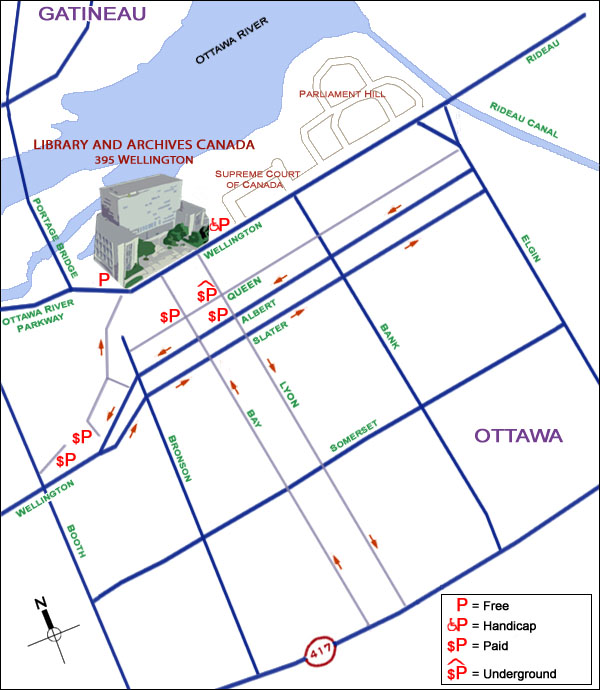
I do not want to be too critical of my former place of employment because it truly was a great place to work and learn and because I know that the people working at Library and Archives Canada (LAC) really do care about making Canada’s documentary heritage more accessible to Canadians. In fact, the time I spent speaking with the Exhibit Manager at LAC reinforced my belief that documents can be presented to the public in an engaging fashion. On the other hand, it does not take an archivist working on the inside to see that accessibility to Canada’s documentary heritage is not a well-known fact. The exhibits at LAC may be small, but they are also well-designed and free to visitors brave enough to enter the doors at 395 Wellington St; unfortunately, little money is spent on advertising these exhibits, and so LAC maintains a low profile.

Should documents of legal, historical, or cultural significance really be shown in the exhibit rooms of LAC, considering the small population of visitors that seem to visit these exhibits? LAC should be an institution that both preserves and makes accessible archival documents. Although digitization and internet searches will increase the public’s ability to access archival documents, it is critical that individuals be aware that such documents and such a repository exist. If the institution is unable or unwilling to advance its own cause, then perhaps other institutions that use archival materials (such as museums or history departments in museums or high schools) need to take up the cause of informing the public as to what archives are all about. Of course, this situation would decrease archivists’ control of the message being sent out regarding archives, but that is the price that archival institutions pay for not putting themselves more in the public eye.

Might more people have lined up to see the 1982 Constitution if it had been exhibited at the Museum of Civilization or the Royal Ontario Museum? Archival institutions need to consider the means and venues that might best show off Canada’s documentary heritiage, and in so doing should take a look at what other institutions of public history are doing to attract the public’s attention.

Atlantic Canada Studies Conference

While working for Library and Archives Canada this past summer, my research led me to the website for the Atlantic Canada Studies Conference. As I browsed through the itinerary, I was struck by the number of sessions that related to topics that the 2006-2007 Public History class discussed in Public History, Digital History, Archival Studies, Social Memory, and Museology courses. This year the conference ran at the beginning of May, and it might have been a great opportunity for Public History students to consolidate their learning experiences before heading out to begin the internship component of the program. Conferences are a wonderful opportunity to learn, network, and socialize that this year’s Public History students may want to consider!

Sep 12, 2007

A New Crew Of Public Historians

Because I am interested in being at the table when Digital Humanities are discussed, I took a few moments yesterday to check out Bill Turkel's new syllabus for the Digital History course at UWO. I was pleasantly surprised to discover that a number of this year's Public History students had already posted to their new blogs. It was fascinating to see how some of this year's first posts were so similar to those published by my classmates last September.

Please browse through the list of Public History students found on the side menu. I know that they will appreciate and respond enthusiastically to having an audience outside of their own class!

Good Luck and Best Wishes to UWO's '07-'08 Public Historians!

May 2, 2007

The Museum of Useful Things

Can a store call itself a museum? I thought that was ours!

While visiting Boston this winter, I found myself wandering through a small store called The Museum of Useful Things. This museum/store displays and sells items that are regularly used in everyday life but have been designed to have a pleasing aesthetic as well. Additionally, The Museum of Useful Things has a few small virtual and physical exhibits for interested visitors to gaze upon. By calling itself a museum, this store is imagining itself as more than a retail outlet – it becomes a site of learning.

In a previous post, I suggested that museums might show and sell reproductions of historical artifacts; perhaps this is the first step in that direction. On the other hand, it seems a tad worrisome that a museum-store hybrid is being conceived by a retail outlet first because a business-like orientation of the museum-store could undermine the museum’s mission to collect, preserve, and educate. Museums seem compelled to move to business models for success though, which makes the museum-store a plausible future manifestation.

The Museum of Useful Things does provide two helpful insights to museums though. First of all, the museum-store is small; it is easy to see everything, and the “collection” is easy to curate. Secondly, The Museum of Useful Things has successfully increased its visitors by mixing education with consumerism as a form of entertainment. In fact, because the museum-store focuses on both the aesthetic and the function of a product, The Museum of Useful Things has succeeded in making ideas of design more accessible to the passing shopper. Furthermore, people will return in order to check what new stock/artifacts have come in. Museums might try experiment with brevity and with mixing education and other interests to sustain the interest of their audiences.

Okay… so maybe we can share.

Apr 8, 2007

Museums’ Return Visitors

During a class visit to the University of Western Ontario’s MacIntosh Gallery last month, the gallery’s curator mentioned that she was committed to create programs that served the university’s student population. This statement got me thinking: A museum that serves its audience successfully is probably one that offers an experience that will make the visitor want to return to that museum. (I suppose that an exceptionally successful museum then would make visitors want to visit other museums as well!)

Interaction with a rotating selection of artifacts might be one way to keep visitors coming back for more. Although it might not be possible for every visitor to physically interact with all the artifacts in a collection, there is the option of allowing a museum interpreter to demonstrate an artifacts use. (Alexander, Museums in Motion, Ch. 11) Open-air museums frequently demonstrate how period crafts and trades were carried out, and perhaps there are artifacts in the collections of indoor museums that could still be operated. If a museum were to come up with a rotation of artifacts in use that changed on a weekly basis, visitors might return to see a particular item in action. This would also create an opportunity for the museum interpreter to convey more information not included on the text panels to those visitors.

Of course, the stress of operation and impact on nearby artifacts must be taken into consideration, showing visitors how different artifacts worked might be a great way to keep people coming back to a museum again.

Mar 25, 2007

A Funtional Analysis for Oral History

Although she often claims that her thoughts are a disorganized, unpublished mess, Diana Dicklich actually is rather consistent at coming up with brilliant insights during class. When we were discussing the importance of inclusively when planning and presenting an exhibit, Diana mentioned the idea of creating a functional analysis for collecting oral histories. After learning more about oral history this weekend, Kelly and Molly might inform me on Monday that it is very normal to come up with a broad plan before conducting an interview for historical purposes; nevertheless, because I think this is a neat idea and because by butchering her original idea I might spur Diana into blogging action, I would still like to explore this idea of a functional analysis for oral history.

Archivists, who all seem to be inundated with acquisitions that need to be appraised, arranged, and described, carry out functional analyses to determine what stays in the archive and what goes in the circular file. To be very brief, an archivist performs a functional analysis by understanding what activities are most important to a creator’s job; the archivist then keeps only the documents that are the result of these activities.

The idea of carrying out a functional analysis with oral interviews is an interesting one because it assumes that the interview has specific uses beyond what the interviewer is looking for. When I was interviewing 3M researchers as a part of my contribution to the Invention to Innovation exhibit, I was interested specifically in how particular inventions were conceptualized, constructed, and used; though the interviews do contain a good deal of information about the history of the inventions in which I was interested, the interview might be of little use to an engineer or a chemist interest in the same invention. Likewise, a person interested in the interviewees’ respective roles at 3M might find the interview wanting as well. A functional analysis of either the interviewee or subject of discussion might have been an effective way to shape a more useful primary source of information. Although a system of macro-appraisal for oral history might not answer all the questions future historians might ask, such an approach could provide a greater level of consistency in terms of what sorts of information were preserved.

Monuments We Can Argue Over

On February 15th, the Globe and Mail Online reported that Estonia’s parliament voted in favour of removing a monument that commemorated soldiers from the former Soviet Union who died during the Second World War. Although the article generated over seventy comments from online readers concerning whether the Soviet Union played a beneficial or detrimental role in Estonia, not one person questioned the idea that a memorial could be torn down.

Amid accusations that this moves represents an assault on fallen soldiers, Estonia’s foreign minister has responded by arguing that since the memorial is not located in a war cemetery, it is a political monument rather than a monument that helps to remember the deaths of soldiers. The decision to remove the monument is also framed as an assertion of Estonian independence from interference in its domestic affairs, but again it is assumed that memorials are not permanent fixtures.

Does this mean that memorials are of our time? Museum exhibits and permanent collections undergo periodic updating, buildings are re-claimed for alternate uses, and even historical plaques, which are written to last generations, have in some cases been re-written in order to more accurately represent marginalized parties. Memorials, exhibits, and plaques all have the power to educate people about the past, and public historians should be vigilant in ensuring that accurate and balanced information is being conveyed to the viewer. It stands to reason then that a monument can be changed to include up-to-date information; however, the Estonian government is removing this monument as a political gesture and in so doing is depriving its citizens of an opportunity to reclaim and commemorate a challenging part of Estonia’s history.

I wonder what will go in the space where this monument stood. Will the government install a plaque commemorating how removing the Soviet monument served to affirm Estonian independence? Though I have little knowledge of Russian-Estonian relations and was unable to imagine an equivalent situation with which I could empathize, I believe it would be better for Estonia to leave the monument where it stands. Instead of removing the memorial, it could be re-dedicated to commemorate the violence that is experienced by both aggressors and victims during war. In this way, Soviet soldiers could continue to be honoured and Estonians could commemorate their occupation by and subsequent independence from the former Soviet Union.
Like all forums where historical discussions occur, memorials represent a space to argue, discuss, shout, coax, appeal, and move towards a consensus about our history.

Mar 13, 2007

World's Worst Interview

Is it possible to be your best by acting your worst?

The Public History students are busy searching out and securing internships in our field for the summer, and this week we are talking about selling ourselves to employers and granting bodies. World’s Worst is a game where players take turns coming up with and acting out the most awful scenarios possible. Since most of us will need to be interviewed before getting hired or our internship, this game is going to help us become the best interviewee by getting out in the open all the things that could go wrong if we did not play this hilarious game.

The object of World’s Worst Interview is two-fold: to continuously have individuals standing up and providing examples of bad things that an interviewee could say or do in an interview, and to brainstorm a list of examples that can be de-briefed afterwards.

Participants start by sitting in a circle. When somebody has an idea, she or he stands up, quickly acts out the scenario (no explanations allowed!), and sits back down so that another person can stand up. The facilitator should try to let the game go on long enough to create a good list of bad examples but keep it short enough so that people still want to play for longer. (This is a critical trick about running any activity: Always leave’em wanting more!) Afterwards, participants can look at the list of examples that would not get a job candidate hired and as a group come up with positive actions that would help a job candidate look his best or her best.

A good round of World’s Worst Interview and the subsequent debriefing will probably take at least 45 minutes, but hopefully this activity will help participants to come away with some effective interview tips and to feel a little less nervous about that first encounter with a future employer.

Yah Hoo!

Mar 7, 2007

Historical Cinema that Succeed

The Last King of Scotland is a compelling film that tells a story of Idi Amin Dada’s regime in Uganda in the 1970s, while also speaking to the political and social conditions still faced by some countries in Africa today. The film has won numerous awards in the past two months, particularly for Forrest Whitaker’s portrayal of Amin, and consequently will likely be seen by millions of viewers. Because I knew nothing about Idi Amin before seeing The Last King of Scotland, when I returned home from watching the film I was eager to learn about the real story of Idi Amin. I expected there to be certain discrepancies and omissions in the film compared to Amin’s real life; however, it was an unexpected surprise to learn that supporting actor James McAvoy plays a character that never existed in real life and was merely based on certain advisors surrounding Amin during his regime.

In spite of my surprise, I have to consider my experience with The Last King of Scotland successful in a historical sense because the film made me want to go home and learn more about Uganda’s past. Although Wikipedia was the first information source I consulted, I discovered that the official movie website also had a (sparse) timeline and (limited) interpretation to expand on (or broadly sketch out?) the story of Amin’s regime; the filmmakers anticipated that movie-goers would be interested to learn more about this man’s time in Uganda! (If only they had more information! Perhaps we can hope the DVD's special features will relate more of the history!)

Historians and theorists continue to debate how the past should be portrayed and interpreted in film, but as a public historian I think that one standard by which films should be judged is their ability to make people curious about the past. If a historical film, be it a documentary or a Hollywood-produced blockbuster, raises no questions and leaves the audience believing that the film is the be-all-and-end-all on that particular subject, then it has, to a certain degree, failed. The five-minute feature or the 12-disc DVD box collection that makes people run to their library or computer thinking “That can’t be right!” or “I wonder what else there is to this story?” is a success because it gets people thinking critically. If somebody films a movie or writes a letter to argue for an alternative interpretation of that history, so much the better!

Anybody who decides to make a living in the field of history probably thinks that History is an important subject for one reason or another. As members of a discipline that teaches critical thinking skills, historians should be as interested in introducing these skills to others as they are in sharing information about the past. A more discerning audience can only compel formal historians to put out more well-argued and well-presented history.

Mar 6, 2007

The Power Flower

As the Public History class considers the problems associated with discussing the history of different ethnic groups, it might be helpful to think about where we are situated in our society. The purpose of the Power Flower is to help individuals identify whether they are part of the majority of their community or in the minority in order to be sensitive to others with less power in that community.

Each participant needs a Power Flower exercise sheet, which can be found on the Zhaba Facilitator Collective website or from the book Educating for a Change. The group first takes time to fill in each of the small, inner petals of the flower by describing themselves according to each category (ex. Social Class: middle class, working class, etc.; Religion: Christian, Muslim, Jewish, etc.). Since some information is of a more personal nature, it is important to let participants know that they do not need to share their answers with the rest of the group; this is an activity to help individuals become conscious of their own place in different power hierarchies.

Once everybody has completed their inner petals, the group comes back together and discusses who makes up the majority for each category. The answers go into the outer petals. How many categories can each individual place themselves in the majority?

To bring the activity back to a Public History context, the group might afterwards discuss the influence of power hierarchies on the public history field. How could an individual’s background affect the choice of a an exhibit’s topic or how the information is presented? What could a curator do to ensure that different groups are presented in a fair and inclusive manner?

Although in the Litigious Age, public historians need to ensure that the rights and freedoms of others are not trampled on in museum exhibits, it’s also just a plain shame to hurt somebody else’s feelings because you never considered their point of view. The Power Flower is a useful way to anticipate some potential trouble spots in an exhibit that could anger or offend visitors. Furthermore, this activity should make people more aware of some of the biases that caused the ROM so much trouble in 1990 with the Into the Heart of Africa exhibit.

Enjoy!

Mar 4, 2007

Please Touch, Pick Up, Use, Press, and Pass Around

Three weeks ago I visited Museum London for the official opening of Invention to Innovation, the exhibit this year’s Public History class put together. All of our hard work paid off! As I mentioned in a previous post, the Public History crew needed to be a little more intentional, and in the last week before our contribution to the exhibit was due, we pulled it off! We came to a consensus on our big idea, narrative, and structure, which definitely created a more unified exhibit of which I think we are all pretty proud.

As I walked through the different rooms of the exhibit, I have to admit that I didn’t read all of the text. I was too busy looking at the cool stuff that we were presenting! There are some really great pieces that have a lot of intricate working parts, such as old type-writers, a roller organ, and a massive linotype machine. A plethora of items have buttons to be pressed, cranks to be turned, and levers to be pulled; however, next to most of these artifacts are signs asking the visitor to please not touch. Reluctantly, I demonstrated self-restraint and obeyed the signs.

During the operational life of the artifacts, these items sat in offices, factories, or living rooms where they were touched and used by their operators. In a museum though, the artifacts are cut off from that human interaction, and the visitor loses an opportunity to interact with the past. Did an operator need to be strong to pull a particular lever? How hard was to get clear reception on that radio? The ability to use an item on display would help visitors to relate with individuals in the past who had to use a phonograph or Balopticon slide projector. Perhaps it might be better to have signs saying “Please use with care in order to allow others to learn from our artifacts as well.”

I know… the signs say “Please do not touch” because artifacts are often delicate. If the items are damaged, future visitors will not be able to have the same experience… But what if the items on display could be broken without the consequence of forever losing a piece of our past? Replicas are already a ubiquitous part of many museums: dinosaur fossils, parts of dioramas, the costumes historical actors wear, and even entire open-air museums are replicas that are designed to help visitors interact with and understand the past! If an object looks, feels, and works the same way as an authentic artifact, it can have a much bigger educational impact by being used than the actual artifact that sits protected in a glass case.

In addition to the educational value that using replica items at a museum would have, museum gift stores could also sell replicas as another source of revenue, thus capitalizing on a market interested in items with an antique look.

For now, it is important to obey the “Please do not touch” signs; however, when you come to the Invention to Innovation exhibit, think about how you might learn about the past differently if you could reach out and touch it.